


Mental Health Awareness -- What It Really Means
"Mental health awareness." You've probably heard it everywhere -- school assemblies, Instagram posts, random infographics on your feed. Okay... but what am I actually supposed to do with this?
"Mental health awareness" has become a buzzword. Schools do assemblies about it. Social media is full of infographics. But what does it actually mean to be aware -- and more importantly, what do you do with that awareness?
This article goes beyond the slogans into what mental health awareness really looks like in practice.
Awareness Starts with Yourself
Before you can support others, you need to understand yourself. That means paying attention to your own mental state -- not just when things go wrong, but regularly.
Check in with yourself: How am I actually feeling today? Not the automatic "I'm fine" -- the real answer. What's stressing me out? What's bringing me joy? Where's my energy at? Be honest... even if the answer is "tired for no reason."
This self-awareness isn't self-indulgence. It's maintenance. Like noticing when you're getting sick before it becomes serious. Early detection > last-minute breakdown.

Recognizing Warning Signs
In yourself, watch for persistent changes: sleep disruptions, loss of interest in things you usually enjoy, increased irritability, difficulty concentrating, withdrawing from friends, feeling hopeless or numb.
These don't always mean something is clinically wrong. Sometimes they're responses to situational stress. But if they persist, they're worth paying attention to. Not everything is "just a phase."
In others, warning signs include personality changes, dropping out of activities, increased isolation, talking about feeling like a burden, giving away possessions, or expressing hopelessness. If you notice these in a friend, don't ignore them. Even if it feels awkward to bring up.

The Difference Between Awareness and Action
Here's where many people get stuck. They're aware that mental health matters. They can recite the statistics. But when it comes to actually doing something -- seeking help, having hard conversations, changing behavior -- they freeze. (Overthinking enters the chat.)
Awareness without action is incomplete. If you know you're struggling, take a step: talk to someone, try a coping technique, book an appointment with a counselor. If you notice a friend struggling, reach out. Don't assume someone else will. "Someone else will check on them" -- yeah... maybe not.
Creating a Supportive Environment
Mental health awareness isn't just individual -- it's cultural. The environments we create affect everyone's wellbeing.
In your friend group, what's the norm? Can people be honest about struggling, or do they have to pretend everything's fine? Is vulnerability met with support or judgment?
You can influence this. When someone shares a struggle, respond with empathy, not dismissal. When you're having a hard time, model honesty. These small actions shape the culture around you. It starts smaller than you think.

The Connection Between Social Relationships and Mental Health
Feeling connected to others is fundamental to mental health. Loneliness and isolation are major risk factors for depression and anxiety.
This is why genuine friendships matter so much. Not just having acquaintances, but people who actually know you and care about you. Not just people you send streaks to.
It's also why apps like POV can play a small but meaningful role. Receiving anonymous positive vibes -- knowing that people in your school see good things in you -- provides a sense of connection. It's not a substitute for deep relationships, but those small affirmations add up. They counter the voice that says nobody cares or notices. Because sometimes, you just need that reminder.
Beyond Awareness: Taking Care of Your Mental Health
Awareness leads to action. Here are evidence-based practices that support mental wellness:
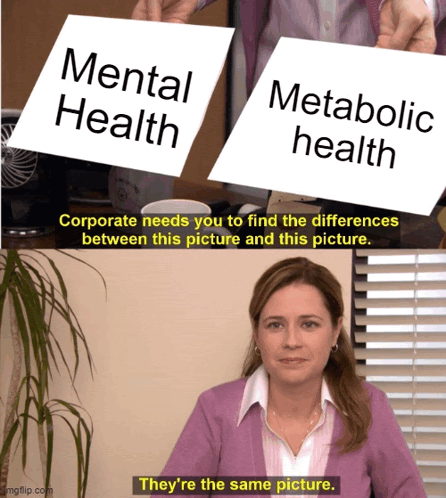
- Physical health basics. Sleep, nutrition, and exercise directly affect mental health. These aren't just physical concerns. Yes, your sleep schedule matters more than you think.
- Stress management. Find techniques that work for you -- deep breathing, journaling, mindfulness, physical activity, creative expression. Build them into your routine before you're overwhelmed. Not just when you're already stressed out.
- Boundaries. Learn to say no. Protect your time and energy. Not every demand on you is equally important. You don't have to say yes to everything.
- Connection. Invest in relationships. Make time for people who energize rather than drain you. (Energy check: who leaves you feeling better?)
- Purpose. Engage in activities that feel meaningful to you. This could be academics, creative pursuits, helping others, or working toward goals. Something that makes you feel like "this matters."
- Professional support. Normalize seeing counselors or therapists. You don't need to be in crisis to benefit from professional support.
Breaking the Stigma
Despite progress, stigma around mental health persists, especially in Asian contexts. Talking about struggles is sometimes seen as weakness. Seeking help is seen as failure. Yeah... that mindset still exists.
Breaking stigma happens through representation. When you share your experiences (to the extent you're comfortable), you normalize them for others. When you treat mental health challenges with the same seriousness as physical health challenges, you model a healthier attitude. You speaking up might help someone else feel less alone.
Final Thoughts
Mental health awareness isn't a checkbox. It's an ongoing practice of paying attention -- to yourself, to others, and to the environments we create together. Not just something you think about once a year.
Awareness is the starting point. What matters is what you do next.